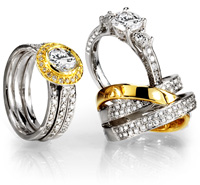
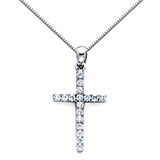
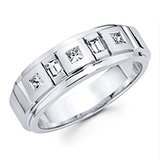
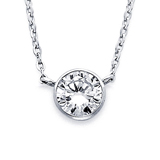
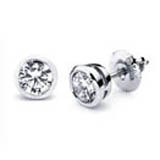
Diamond Jewelry AccessoriesImmensely alluring and highly valuable, diamonds are still considered the benchmark for precious gemstones in fine jewelry for women and men. Diamond jewelry still attracts many people because of its huge sparkle, hardness (mohs scale=10), and value, and many brides prefer diamonds engagement rings because of those qualities. White diamond jewelry is the most popular, and yet, diamonds come in a variety of natural colors such as yellow, purple, champagne, and black but are more rare than white diamonds. Also, because of its durability, diamond rings and other diamond jewelry can be worn every day, compared to softer gemstones, such as emeralds and rubies. Diamond jewelry's exquisite qualities make it a highly sought-after jewelry accessory to have and give as a gift for special occasions.
At GoldenMine, you will find a wide selection of high quality white diamond engagement rings, diamond necklaces, diamond studs, tennis bracelets, and more at a fraction of the cost at other retailers. These diamonds are conflict free, and our suppliers and vendors are affiliated with the Kimberley Process. Shop our Diamond Jewelry Collection to find exquisite gifts for men and women.
LEARN MORE:
Let our jewelry experts help you find your wedding bands. Check out our Jewelry Buying Guides - Diamond Guidelines, Diamond Cut Styles, How to Choose an Engagement Ring, and Tips on Colored Gemstones - or call our Customer Service.
Featured Reviews on Diamond Jewelry
"I was very nervous about getting this ring, but after I recieved it, I was in AWE!!!! My fiance almost cried when I placed it on her finger. She looked at her finger none stop for 3 straight days. Wonderful purchase...."
- James
"Too stunning! I looked for a long time for diamond studs, and this was the best deal. Great color and clarity! I have received many compliments from friends and strangers. I highly recommend them."
- Tamitha |