|
|
|
|
 |
| Why You Should Buy Early This Holiday Season 2021 |
| 10/01/2021 |
With the weather cooling down and getting crisp, the up-coming holiday season lingers just around the corner. While fun costumes, scary movies, and all things spooky for Halloween may be on your mind now, you may also want to start thinking of the gifts that you want to give this year if you celebrate any of the November / December holidays. We highly encourage our customers to BUY EARLY this season.

Why?
We recommend to buy your gifts earlier than normal for a couple of reasons.
- You may have already heard in the news that retailers are experiencing major inventory shortages on popular gifts and everyday items due to the pandemic’s effects across the globe. The jewelry industry is no exception and has also seen their fair share of shortages. We have been dealing with this situation over the last year and expect that the jewelry supply will get even tighter towards the end of the year.
- Besides the pandemic, Hanukkah starts early this year on November 28, so gift giving begins earlier this year.
- Shipping carriers are urging customers to send their gifts sooner rather than later since shipping traffic is way up currently.
With this anticipation, we took steps to prepare for this up-coming holiday season to help offer the items you want. We still recommend that you buy your gifts earlier than normal this year.
What does that mean for you?
To get into the holiday spirit, we will start offering SPECIAL HOLIDAY DEALS EARLY, starting some time in October. Be sure to sign up for our e-newsletters and text messages to get alerts on these offers, including exclusive offers for our subscribers.
Browse our holiday gift guide now and plan your gift giving list. Check out our Holiday Gift Guide here.
We hope we can add some cheer with our up-coming offers for the rest of the year! |
|
|
Posted by Lee at 5:12 PM - Link to this entry Share this entry
|
|
|
|
|
| Important Customer Information Related to Coronavirus (COVID-19) |
| 03/20/2020 |
UPDATE: Our office is now open! Originally, the statewide shutdown / stay-at-home order was planned to last through April 19, 2020, which was later changed to May 15, 2020 (subject to change). Check up-to-date information in this webpage.
In order to battle the effects of the coronavirus (COVID-19), the State of California issued a statewide shutdown from March 19 - April 19, 2020. Our headquarters is located in Los Angeles, CA, and our office will be temporarily closed during that time.
During the Shutdown (March 19 - April 19, 2020)
You can still shop at our site. We are still accepting orders, and they will be processed and shipped out when our office reopens.
If you have any questions or concerns, Customer Service will still be available. Simply email us, and we will respond within 48 hours on weekdays.
In-stock jewelry orders that were placed on March 19, 2020 before 10am PDT were shipped out. For those who placed an order after that time or had a processing time over one day, your orders will be processed when our office opens. If you'd like to cancel, please email us.
Regarding returns and exchanges: We will suspend the 30-day policy during the shutdown until our office reopens. You can still go ahead and contact us if you would like to return or exchange your items. However, please hold off on mailing your items until our shutdown is over. We will contact you when you can mail them back. If you mailed your order for return or exchange and it is still en route, your package will be sent back to you.
If anything else changes, we will keep our customers up to date as soon as possible.
We thank you for your understanding and support during this time. Our hearts go out to all those affected, and we are wishing everyone well. |
|
|
Posted by Dave at 1:57 AM - Link to this entry Share this entry
|
|
|
|
|
| Last Minute Mother's Day Gift Ideas |
| 05/05/2018 |
As Mother’s Day nears just around the corner, you might wonder how you can show your appreciation to her this year. Why not gift her a long-lasting and lovely piece of jewelry? Treat your mother to a beautiful gift that she’ll love to wear. A thoughtful gift of jewelry symbolizes how deeply you care for her. If you’re still looking for a gift to get your mother on this upcoming Mother’s Day last minute, we put together a list of 5 great jewelry choices for the most important woman in your life.
1) Madre Pendant with Flowers in 14K Tricolor Gold
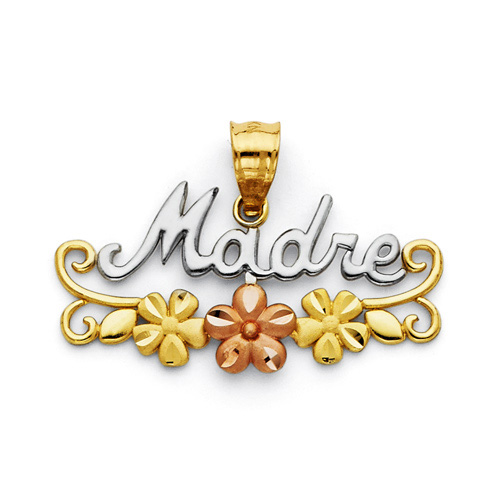
Your mother will adore this charming tricolor gold pendant. This pendant depicts the word “Madre,” meaning “Mother” in Spanish, in white gold script. Below, the pendant features three yellow and rose gold flowers. This adorable pendant is a considerate gift for Spanish-speaking mothers. Pair it with a 2mm yellow gold chain for a gift that your mother will always cherish. Click here to see our gold chain necklace collection.
2) White Gold Whimsical Heart Link Necklace Bracelet Set in 14K Two-Tone Gold
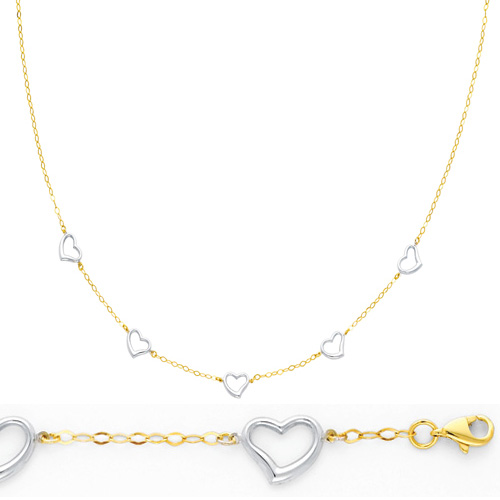
If you're unsure about whether or not to give your mother a necklace or bracelet, how about gifting her both? This attractive set features a two-tone gold necklace and matching bracelet. This set features an adorable, curved heart design in white gold that contrasts with the yellow gold links. This matching set will make your mother smile whenever she wears it.
3) Mother Child Double Heart CZ Pendant in 14K White Gold
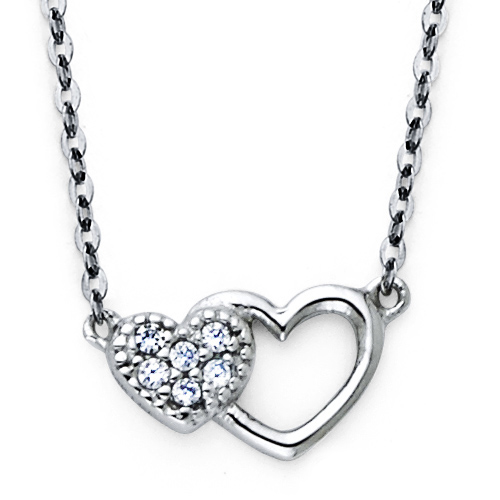
This gorgeous white gold pendant symbolizes the strong bond between a mother and her child, as conveyed by the design of two overlapping hearts. The leftmost, "child" heart is adorned with CZs that sparkle beautifully in the lights. Your mother will always have a striking reminder of your love for her as she wears this necklace.
4) Whimsical #1 Grandma Pendant in 14K Yellow Gold
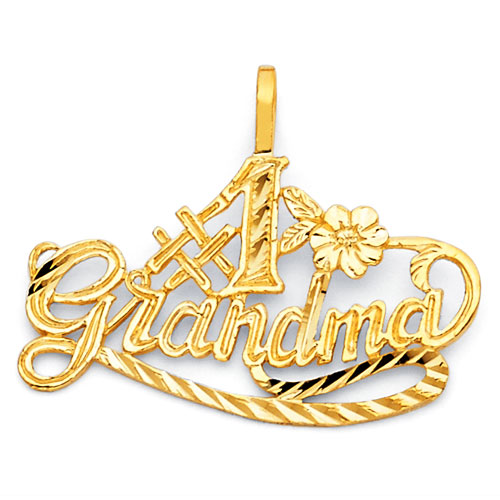
Of course, Mother’s Day is also a day of appreciation towards the mother figures that provided us with kindness and care throughout our lives. Gift your grandmother this darling yellow gold pendant to let her know that she’s the #1 grandma in your life. She’ll love the dazzling shine of the diamond-cut pendant that can be paired with a 2mm or thinner necklace.
5) Twisting Rope Knot Pearl Drop Earrings for Women in 14K Yellow Gold
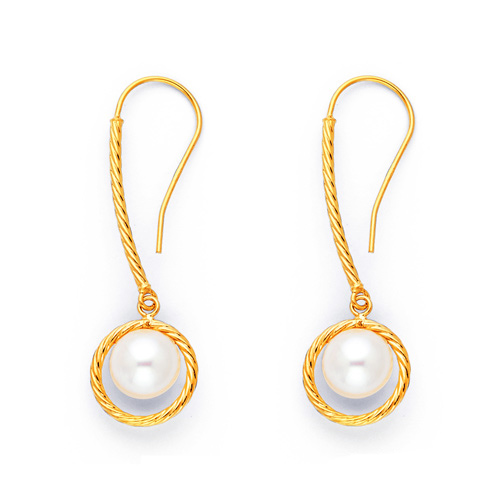
This graceful set of hanging yellow gold earrings is a great fit for the woman who appreciates a classic style. Pearls are always a wonderful choice, and these earrings feature round white cultured pearls that your mom will love to show off. Give her this elegant and eye-catching gift this Mother’s Day, and she’s sure to be delighted.
Let your mother know of your appreciation for her with one of these pieces or any other product from our marvelous selection of fine jewelry. As you browse our large selection of rings, necklaces, bracelets, and earrings, you’ll be sure to find the perfect gift for the very special woman that’s always been there for you in life.
Browse our full selection of Mother’s Day gift ideas here. |
|
|
Posted by Mayra at 12:18 PM - Link to this entry Share this entry
|
|
|
|
|
| Top 5 Men's Wedding Bands This Season |
| 05/22/2017 |
With wedding season fast approaching and since May is Gold Month, we're putting out a list of the top 5 men's gold wedding bands this year. Ideally, you want to find your wedding band at least two months prior to the wedding date. If you need quick inspiration, check out this guide where you'll find rings that have more than the classic look -- from hammered to subtle diamonds.
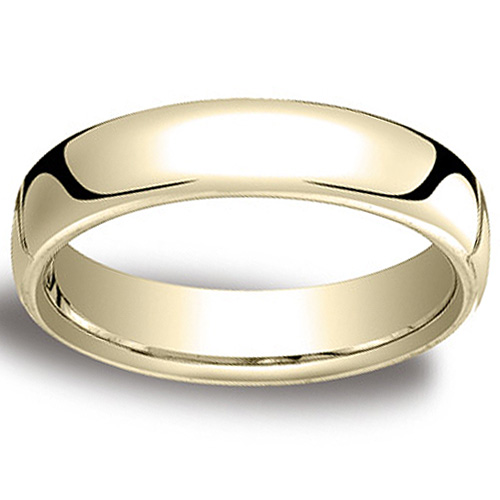
1) 5.5mm Euro Comfort-Fit Flat Classic Wedding Band - 14K, 18K Yellow Gold
With elements of a plain wedding band, this ring takes a notch up with straight round edges. Men can appreciate its clean lines and flat, contemporary design. Plus, it has a Euro comfort fit to reduce the amount of metal touching your skin. This ring comes in solid 14K-18K yellow and white gold. Made in USA.
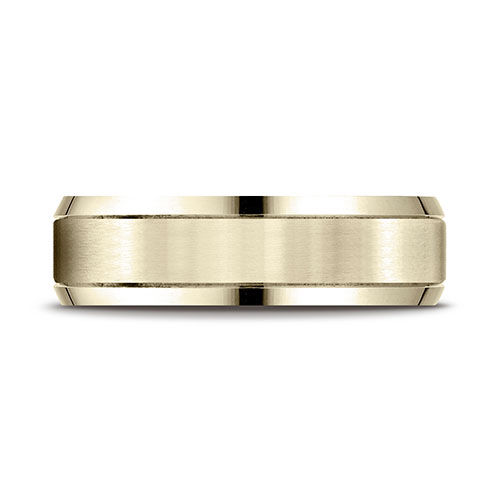
2) 6mm Satin Grooved Beveled Wedding Band Ring by Benchmark in 14K Yellow, White, and Rose Gold
Similar to traditional rings, this designer ring by Benchmark has simple, clean lines. Yet, it has polished beveled edges on either side of a satin-finished, flat center that exude a more modern and masculine style. This ring has a comfort fit, so you can wear it more comfortably for extended periods of time. This ring comes in solid 14K yellow, white, and rose gold. Made in USA.
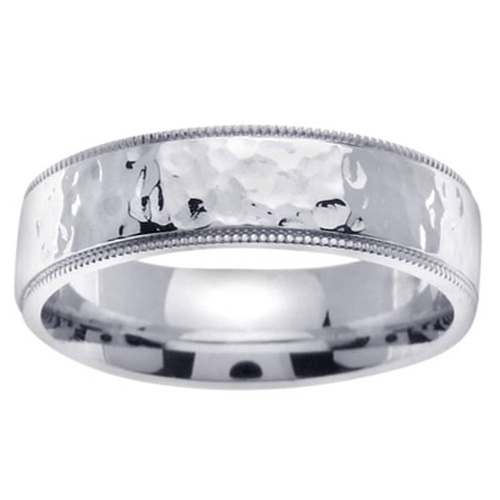
3) 7mm Hammered-Finish Milgrain Men's Wedding Band in 14K White Gold
This ring is for the man who wants a noticeable ring by design instead of with stones. Decorated with a hammered finished on a polished band with milgrain edges, this band has a rugged yet classy design in solid 14K white gold that catches the eye. Similar to the other rings in this list, this one also has a curved inside, creating a comfort fit. Made in USA.
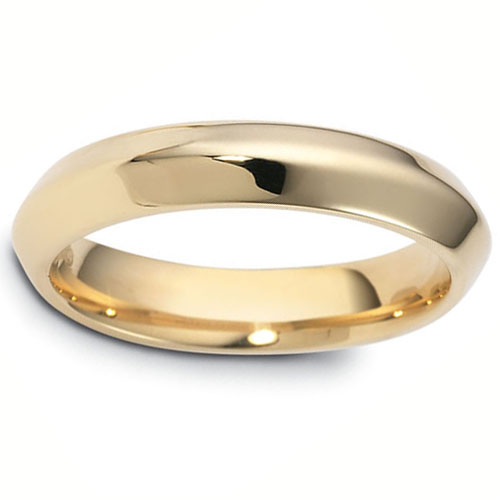
4) 4mm Knife-Edge Comfort-Fit Wedding Band in 14K-18K Yellow Gold by Dora Rings
Sleek and unique radiates from this men's wedding band by Dora Rings. Polished with a bright shine, this sophisticated, modern ring features a knife-edge center and boasts clean lines. This style suits men who want a classy, designer look made with solid, high quality 14K or 18K yellow gold. This ring also has a comfort-fit style, and all Dora Rings jewelry are hypoallergenic.
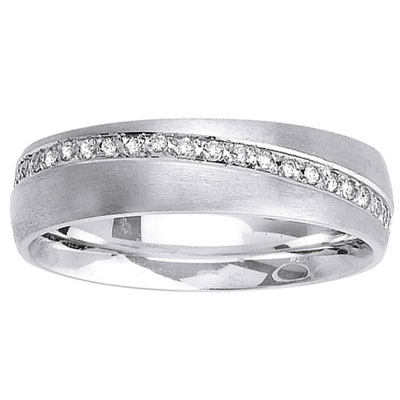
5) 6mm Brushed Diagonal Round Diamond Wedding Band - 14K White Gold 0.48ctw
For men who want subtle bling, this diamond wedding band makes a superb choice. Round-cut diamond accents in a pave setting shimmer exquisitely in a diagonal row. Crafted with solid 14K white gold, the brushed finish on the outside adds a refined touch to this chic, low-dome ring. Made in USA.
View our entire wedding band collection here. |
|
|
Posted by Connie at 1:42 PM - Link to this entry Share this entry
|
|
|
|
|
| Adult Signature Required Shipping |
| 11/30/2015 |
We understand that you want to avoid having any of your packages stolen, especially when ordering jewelry gifts for this holiday season. With the ever increasing rise of online shopping, many thieves unfortunately scout porches and mailboxes for shipped packages, especially during the high-traffic holidays. Package thefts are up 50% since last year, according to CBS News. Rest assured, all of our packages require an adult signature with the exception of standard shipping, which may require an adult signature.
  Often times, thieves feel indifferent to what's actually inside the packages -- the interest is in the resale value. If your item isn't worth reselling, well, they haven't lost much. They can always find someone who's willing to take them off their hands or even return them for refunds so that you'll never see either your item or your money. Though many package snatchers were caught on home surveillance videos, others remain at large. They sneak onto the properties in any guise they can, some of them even bold enough to follow UPS trucks to their destinations. However, with adult signature confirmation, we know that our packages will be delivered directly to the hands of our customers with little chance of anyone snatching them before they receive them. We stand by our products and want to provide our customers with a quality experience. That means giving you delivery that you can be confident about. Often times, thieves feel indifferent to what's actually inside the packages -- the interest is in the resale value. If your item isn't worth reselling, well, they haven't lost much. They can always find someone who's willing to take them off their hands or even return them for refunds so that you'll never see either your item or your money. Though many package snatchers were caught on home surveillance videos, others remain at large. They sneak onto the properties in any guise they can, some of them even bold enough to follow UPS trucks to their destinations. However, with adult signature confirmation, we know that our packages will be delivered directly to the hands of our customers with little chance of anyone snatching them before they receive them. We stand by our products and want to provide our customers with a quality experience. That means giving you delivery that you can be confident about.
With signature confirmation, you know your package is going exactly where it's intended to go -- into your hands or trusted individual to sign for your. All of our packages that use 2-Day Air and Next-Day Air shipping methods require adult signatures upon delivery. Standard shipping may or may not require an adult signature. Concerned that your package might not be coming with a signature confirmation? Contact our customer service department by phone during business hours or email to check on your shipment. Have no worries about stolen packages from your front steps when ordering with us when choosing our air shipping methods. Click here to learn more about our shipping methods.
|
|
|
Posted by Connie at 3:58 PM - Link to this entry Share this entry
|
|
|
|
|
| Our Gold Chain Jewelry Comes From... |
| 11/20/2015 |
We’ve gotten a couple of questions on where our gold chain necklaces and bracelets come from, so we'd like to take this opportunity to answer those questions. Most of our gold necklaces are made in the USA from imported gold, and the other place is Italy. In the past, gold chains were notably from Italy. Italian-made necklaces were a sign of prestige and quality because the designers created jewelry with the utmost craftsmanship. Some Italian designers went to the US and brought their expertise to the states. 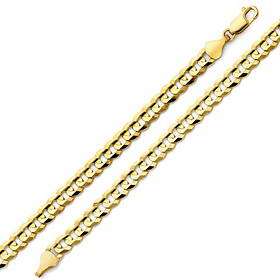 Due to regulations, duties and taxes are applied to gold jewelry made in Italy, making them more expensive. Our US suppliers use similar machines, techniques, and designs, so their gold chain jewelry are comparable to Italy’s yet cheaper. The quality of USA-crafted gold links is similar to Italy’s quality. Due to regulations, duties and taxes are applied to gold jewelry made in Italy, making them more expensive. Our US suppliers use similar machines, techniques, and designs, so their gold chain jewelry are comparable to Italy’s yet cheaper. The quality of USA-crafted gold links is similar to Italy’s quality.
Without the associated fees in shipping or the tariffs and taxes involved in imported jewelry, you get the best price without sacrificing style. These gold necklaces and bracelets are constructed and manufactured in the US using imported gold with ultimate care and the highest of standards, ensuring durable jewelry that will serve you for years. Customer support is easy to deal with because the necklace manufacturer is located here in the US as opposed to overseas. When you want the ultimate alternative to Italian gold links without the expensive price tag and excessive tariffs, choose our gold chains.
If you have any questions about our gold chains, give our customer service department a call during business hours or email. As a family-owned company based in Los Angeles, we are happy to offer our customers gold chain jewelry crafted in the United States.
Browse our gold chain necklaces from the US here. |
|
|
Posted by Connie at 10:43 PM - Link to this entry Share this entry
|
|
|
|
|
| Our New Jewelry Mobile Shopping Experience |
| 07/17/2015 |
We are excited to announce the launch of our new mobile site at GoldenMine! The trend of people shopping and browsing the internet on their handheld devices keeps growing. Since our mobile views increased over 50% this year compared to last year and currently make up over 35% of our total visits, we wanted to offer you an enhanced jewelry-buying experience on smart phones and tablets. These devices have smaller screens, and full desktop computer websites are much larger than those screens, making customers scroll, pinch, and zoom out too often. In order to make mobile shopping easier to use for our customers, we wanted the mobile site design to have a similar look and feel as the full version and better fit smaller-sized screens.
Features
Mainly, the mobile version will be similar to the main body sections of our desktop version without sidebars. The font styles, images, and colors are similar, so you can navigate the site more straightforwardly and easily recognize the categories and information you want to find as you would on a desktop or laptop computer. You can also click on the SHOP button located in the top navigation bar to find all the major jewelry categories, such as chain necklaces and rings.
With a simplified version of our full site, we designed the mobile site to reduce scrolling up and down and the need to zoom in and out or scroll left and right.
Our mobile site takes less time to download, so it’s faster to use than viewing our full site on your handheld device.
The checkout page is mobile-friendly with larger font sizes and buttons to place orders more easily by your smart phone or tablet.
The full site version can still be accessed with handheld devices by clicking on the button at the footer of each page.
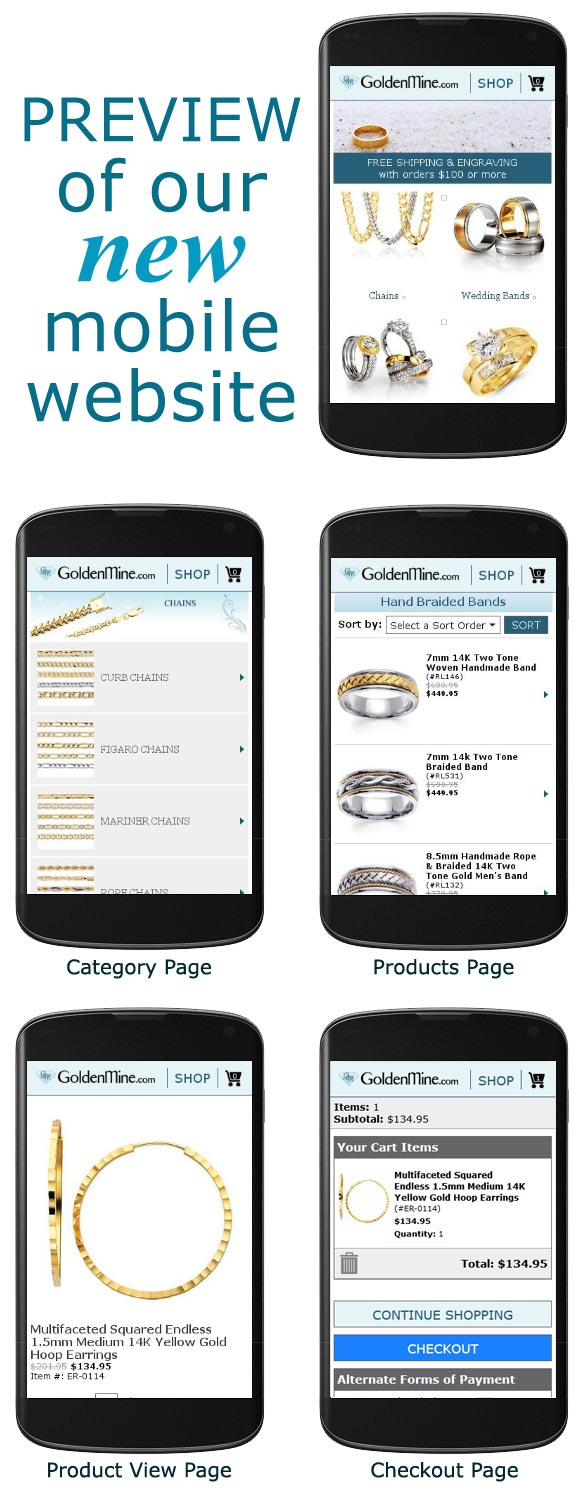
When you are looking for gold jewelry or any other fine accessories on your smartphone or tablet at GoldenMine, we hope you enjoy your mobile shopping experience in our new mobile-friendly site.
|
|
|
Posted by Dave at 2:19 PM - Link to this entry Share this entry
|
|
|
|
|
| Summer Jewelry Splurges 2015 |
| 06/26/2015 |
Summer is finally here -- Now is the time to put on your summer gear, relax, and pamper yourself! Get a mani-pedi, suntan on the beach, or a ride out on a boat. All the while wearing your best summer gear under the hot golden sun. Flirty dresses, slide sandals, and chic bikinis for women and v-neck shirts, board shorts, and comfy flip flops for guys or whatever they may be. With fashion moving towards simplicity this carefree season, indulge in jewelry that reflects this mood with a bit of style, design, and/or pop of color that complement the sunshine and bronzed skin.
Summer Splurges
 |
|
 |
|
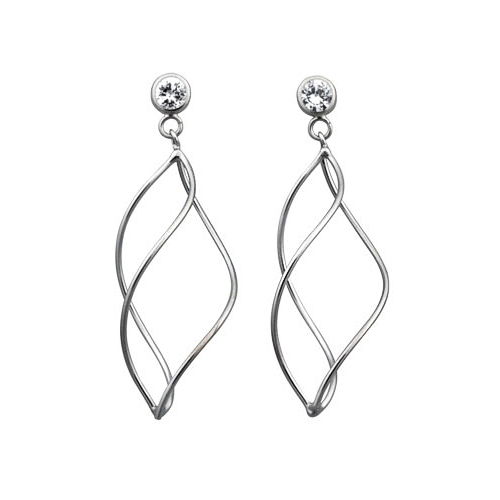
Appearing light and airy, these dangling earrings have elegant, swirling lines reminiscent of a flame. They also have a CZ for a hint of sparkle..
|
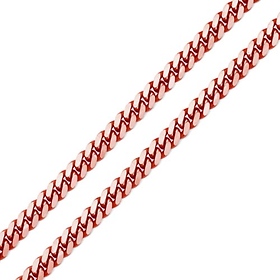
With a warm rose hue, this rose gold necklace with tight Cuban links has a sleek shine, especially under the sun, and attractively stands out during at summer night parties.
|
 |
|
 |
|
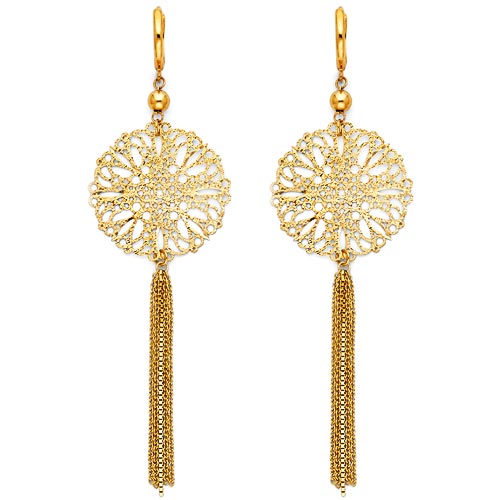
Tassels are still hot this season, and these gold earrings are no exception. Made with an alluring yellow gold and delicate design, they'll shimmer and sway beautifully under the sun.
|
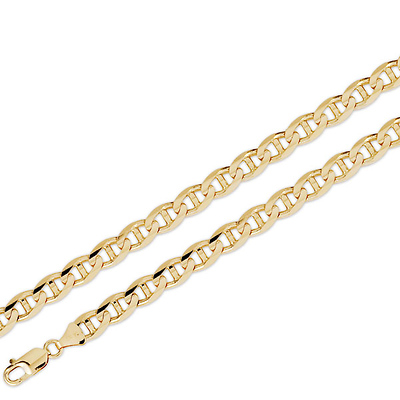
With a nautical theme, this yellow gold mariner link bracelet is a hot beach jewelry accessory. If you want to have a minimalist look, this 8mm bracelet adds a handsome panache without needing any other jewelry.
|
 |
|
 |
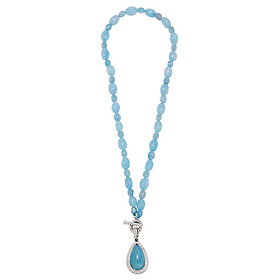
Aquamarine's blue-green color resembles the tropical ocean, so this necklace makes a stylish beach jewelry. Plus, this color looks gorgeous against sun-kissed skin Pantone's Color of the year 2015.
|
|
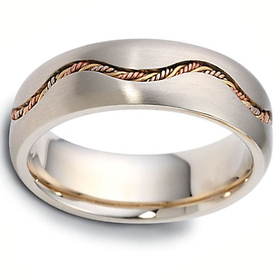
This ring's European beauty and craftsmanship definitely shines, Its tri color gold rope design modestly waving around the band suits this season's carefree lifestyle.
|
 |
|
 |
|
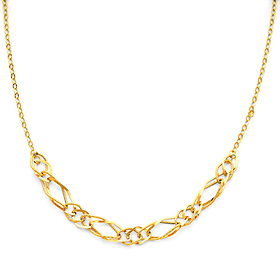
This yellow gold necklace has simple yet striking lines that resemble a Figaro chain. It gorgeously accentuates the decolletage without overwhelming the area.
|
|
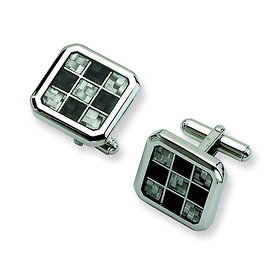
Carbon fiber has an artistic yet masculine look, and these cuff links are no exception. Their light and dark checkerboard pattern, reminiscent of playing checkers at the park, adds a touch of summery style to business suits.
|
|
|
|
Posted by Connie at 2:50 PM - Link to this entry Share this entry
|
|
|
|
|
| Top Women's Jewelry to Wear at Job Interviews |
| 05/19/2015 |
We're in the midst of college and high school graduation season, which means many graduates are looking to begin a new career and preparing for interviews. If you are a female new grad, know that while practicing how you answer questions is important, it is also significant to look your best professionally while showing a bit of your personality in a positively memorable way. Jewelry is one of the best ways to show your personality and complete your interview attire.
What Types of Jewelry Women Should Wear at Interviews
When referring to jewelry, the rule of thumb is to think conservatively, so choose simple, non-controversial pieces. However, what jewelry you wear depends on what people wear in your industry (read top 10 jewelry to wear at work). For example, if you are seeking a nursing job, nurses are not allowed to wear elaborate, big accessories that can interfere with their work, so stick to small stud or hoop earrings and simple necklaces. If you are seeking a creative job, you can wear something a little bit more elaborate, colorful, and/or artistic without causing distractions. Avoid off-putting accessories, such as jewelry with political and religious themes and big, noisy, and dangling items. Keep in mind that you want to enhance your look and have your interviewer focus on you instead of your jewelry.
|
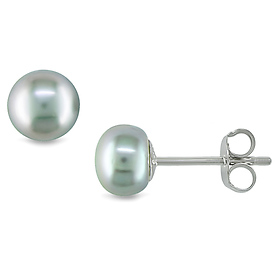
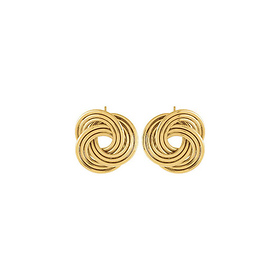
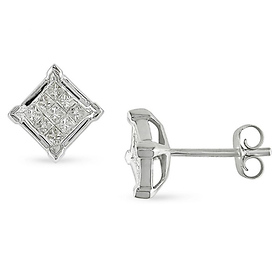
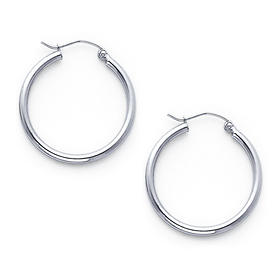
Earrings – Since earrings are the closest piece of jewelry to the focal area - your face - avoid dangling and chandelier earrings which may detract interviewers from listening to what you are saying. Small stud earrings, 6mm width max, and hoop earrings, 1-inch diameter max, are generally safe choices. Find styles that fit within those parameters.
|
|
|
|
|
|
|
|
Silver Grey Pearl Studs >
Pearl studs are classic, and grey is a nice neutral color that goes beyond the standard black and white colors.
|
Open Knot Studs >
You can choose to show your fashion sense and personality by picking a tasteful, fashionable style of studs. These earrings feature an elegant, open knot design.
|
Block Diamond Studs >
If you want to add a touch of elegance and subtle sparkle to your interview attire, choose these princess cut diamond stud earrings.
|
|
|
|
|
|
|
Small Gold Round Hoops > Polished round hoop earrings are always classic, especially at this size. These hoops are graceful and refined.
|
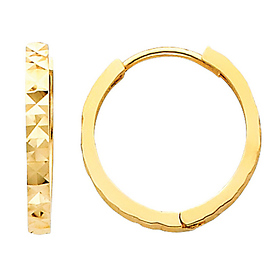
If you want more style than the classic hoops, these gold hoop earrings with an attractive faceted design make an excellent choice.
|
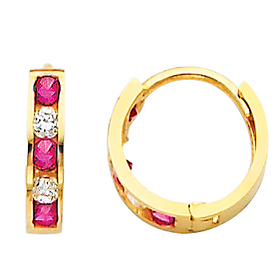
You can add color subtly with these huggie earrings. The white and ruby-red CZs complement each other beautifully without giving off an overpowering feel.
|
|
|
|
| Bracelets – Similar to earrings, thinner bracelets work best in interviews. Consider wearing a single bracelet at most on each wrist. If you wear more than one, especially bangles, you can make a lot of noise. |
 |
|
 |
|
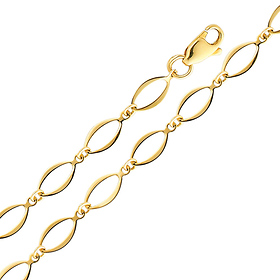
This oval link bracelet has a gorgeous, refined design that complements a professional wardrobe. Plus, it is lightweight and unfussy, which will keep from diverting your attention away from interviewers.
|
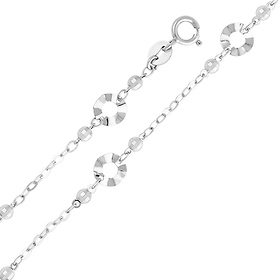
Link bracelets are on trend. Made with decorative circle links, this white gold bracelet fits the fashion trends in an interview setting.
|
 |
|
 |
|
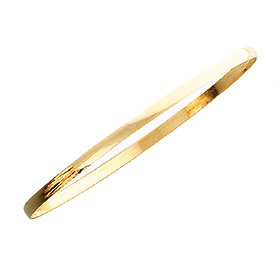
With a classic solid round shape, this 3mm yellow gold round bangle makes a simple yet chic choice to wear at interviews. Remember to only stick to one bangle per arm to avoid making unnecessary sounds.
|
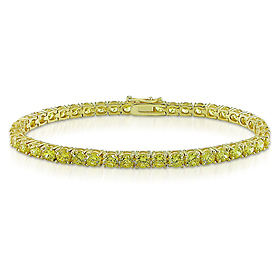
Tennis bracelets are also timeless. With the combination of refinement and golden yellow color, this bracelet livens up your interview look in sophisticated manner.
|
|
|
|
| Necklaces – While statement necklaces are currently trendy, modest necklaces are still recommended to wear in interviews. You can still find attractive necklaces that complement your fashion sense in a simpler scale. |
 |
|
 |
|
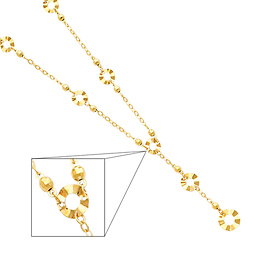
Alluring with finesse, this 14K yellow gold Y-necklace is appropriate to wear during interviews without causing much distractions.
|
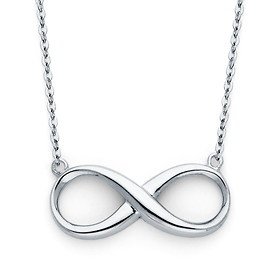
Pendants and charms can be another way to show more of your personality. Just remember to choose ones that are small and non-controversial, such as this floating infinity charm necklace.
|
 |
|
 |
|
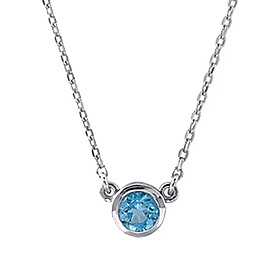
The color blue has a pleasing effect during interviews. The simplicity of this necklace and stunning Swiss blue color makes an elegant choice to wear at interviews.
|
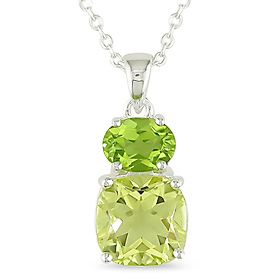
The green and yellow colors of the peridot and quartz stones delightfully complement each other in sophisticated way. This silver necklace makes a charming choice for interviewees who want to add color to their attire.
|
|
|
The process of finding a job can be daunting. You have so many things to prepare and figure out. One thing that can help with the process is to have your accessories in place, so you have less to worry about on the day of your interview. Just remember to choose jewelry that is simple, non-provocative, and industry-appropriate as well as shows a glimpse of your personality.
|
|
|
Posted by Connie at 4:53 PM - Link to this entry Share this entry
|
|
|
|
|
| Good Luck Charms - What Makes Them Lucky |
| 03/16/2015 |
This Saint Patrick's Day, get the luck of the Irish no matter who you are with time honored good luck charms. From traditional four leaf clovers to lucky horseshoes, popular tokens of good luck make a great jewelry choice for good karma in the new year. Lucky charm jewelry gets its roots in superstitious and religious imagery that people have respected for years, and may even bring you excellent fortune.
Good luck charms come in many different forms, not just the four-leaf clover. Italian horns, horseshoes, ladybugs, and elephants are also popular symbols that are believed to bring about great fortune, but how did these beliefs come about?
|
Four Leaf Clover
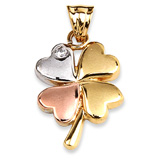
The rare four-leaf clover, also known as a shamrock, is a natural variation of the common three leaf clover and has been prized for bringing good luck for centuries. The tradition comes from an old Irish rhyme that labels each leaf for the following positive attributes: 1) faith, 2) hope, 3) love, and 4) luck. Shamrocks are a common motif in clothing and jewelry, which make a fun, whimsical, and flirty statement.
|
 |
|
|
|
Italian Horn Pendant
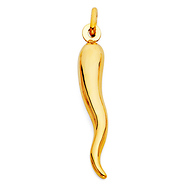
The delicate and stylish shape of the Italian horn pendant is a popular jewelry choice. This traditional lucky charm has been used for centuries to ward off the negative effects of the evil eye and help keep the wearer safe from harmful intentions. The horn is also a sacred symbol of the moon goddess and brings protection.
|
 |
|
|
|
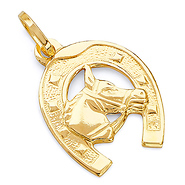
Horseshoe
Traditionally made from iron, horseshoes are some of the most important transportation technology invented before the automobile. Their iron construction is part of what makes them a popular good luck token since in folklore, iron is believed to ward away evil spirits. The simplicity of the horseshoe design makes them easy to wear as lucky jewelry.
|
 |
|
|
|
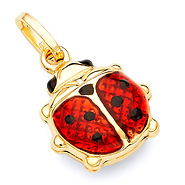
Ladybugs
As bright little beetles, ladybugs greatly benefit farmers, which gives them their lucky status. These insects eat other pests that harm farmland without injuring the plants, so while some cultures consider them auspicious, they also believe that squashing ladybugs can bring ill fortune. Their stunning bright red color and cheerful look makes them a cute and quirky spring jewelry choice.
|
 |
|
|
|
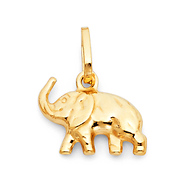
Elephants
In Feng Shui, Hinduism, and other beliefs around the world, elephants are considered a symbol of strength, protection, and good luck - more specifically with the trunk up. On the other hand, elephants with their trunks down are considered bad luck. The reasons of why they became symbols of luck varies. One of them stems from the Hindu elephant-headed god, Ganesha, honored as the god of luck. Furthermore, the trunk up may stem from the US belief that a horseshoe faced upwardly keeps the luck from running out. These proud and protective animals make a bold and powerful fashion statement and bring good fortune and courage to the wearer.
As mentioned in our previous blog on what jewelry to wear during the Year of the Ram 2015, wearing a gold elephant pendant would be auspicious this year.
|
 |
Click here to see our collection of good luck charms in gold and silver. From horseshoes to Italian horns, these pendants may just be the spark you want to add luck in your life.
|
|
|
Posted by Connie at 6:42 AM - Link to this entry Share this entry
|
|
|
|
|
|
|
|